
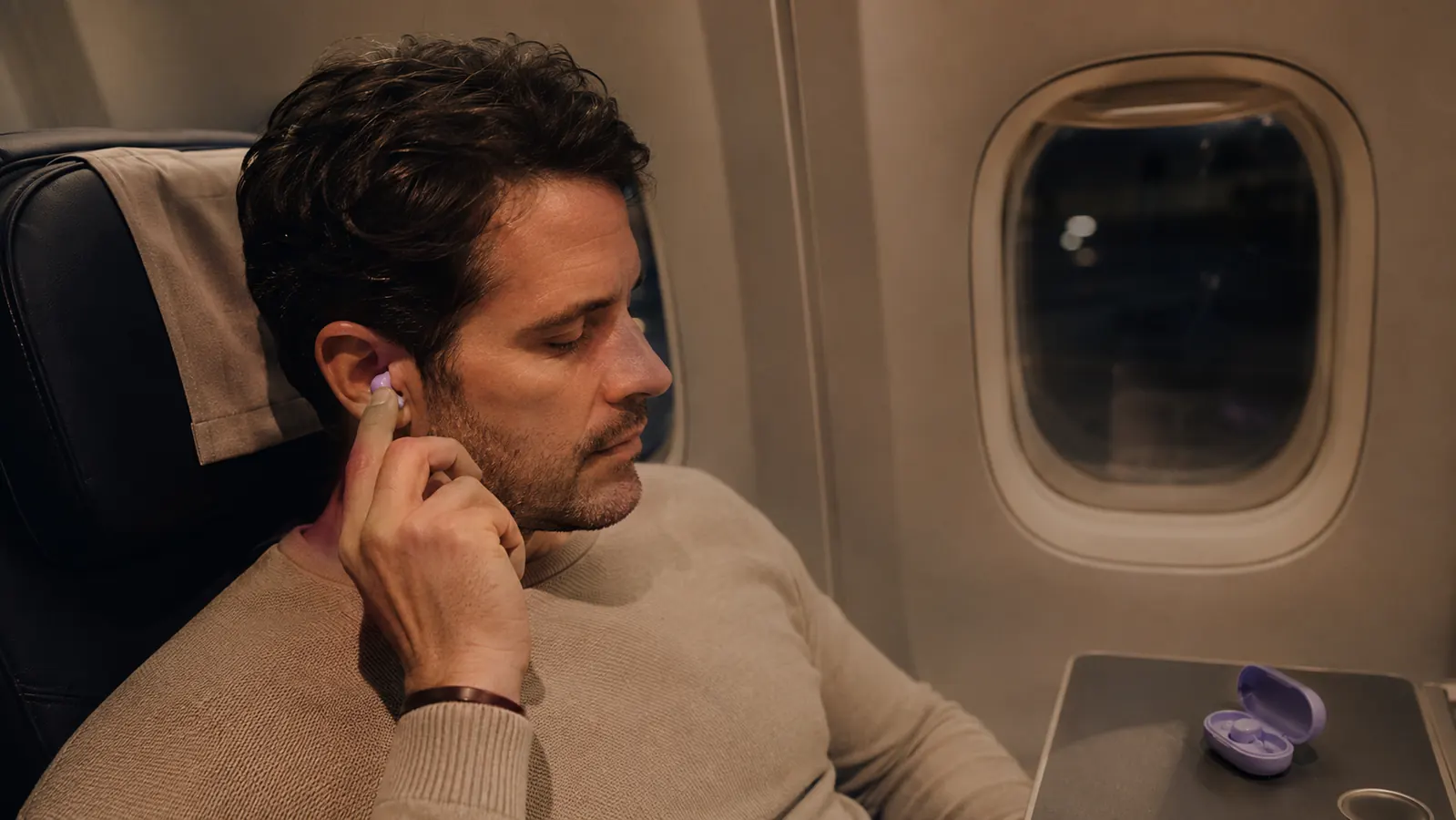
For years I flew with a crumpled strip of foam earplugs shoved in the side pocket of whatever bag I was carrying that trip. Half the time they were linty. The other half they had already lost their spring from being squeezed in my pocket too many times. I switched to Mack's Pillow Soft Silicone Earplugs on a recommendation from a flight attendant I sat next to on a delayed red-eye out of Denver, and I have not packed a box of foam plugs since. The 12-pair case fits in the smallest pocket of my dopp kit and it has outlasted three separate trips without needing a refill.
Foam and silicone solve the same basic problem, blocking noise so you can sleep or focus, but they do it in completely different ways. Once you understand why silicone wins for actual travel use, foam starts to feel like the version you settle for because it is what the gas station sells.
Still digging a stiff, linty foam plug out of your pocket before every flight? There is a reason flight attendants carry the other kind.
Mack's Pillow Soft Silicone Earplugs hold a 4.5-star rating from nearly 6,700 travelers and come 12 pairs to a case. Check today's price before your next trip.
Amazon Check Today's Price on Amazon →It Molds to Your Actual Ear Shape
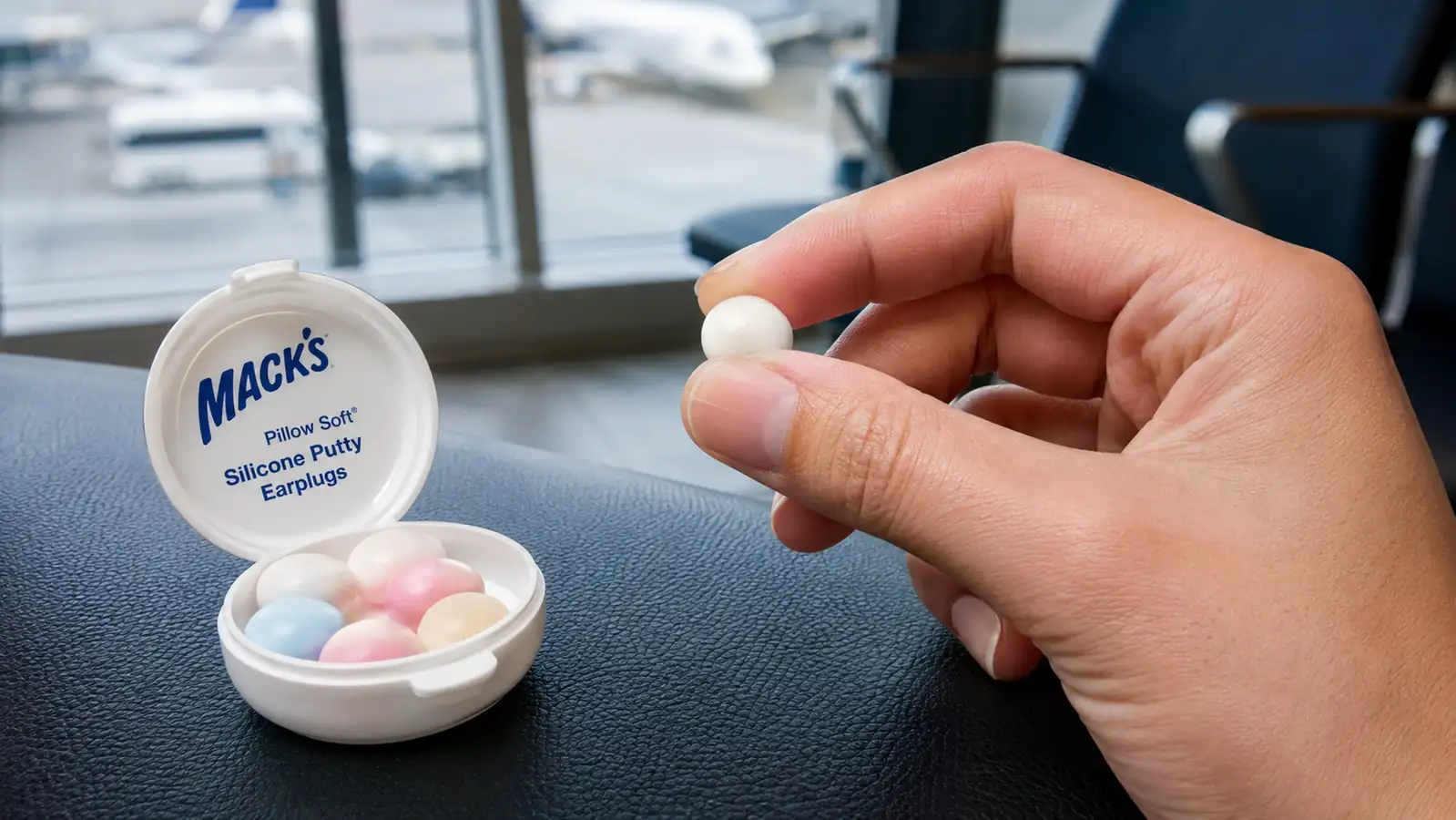
Foam earplugs come in one cylinder shape and expect your ear canal to cooperate. Not every canal is a straight, even tube, and mine definitely is not. Mack's Pillow Soft is a ball of soft silicone putty that you press flat and shape over the opening of your outer ear instead of pushing inside it. It does not care whether your canal is narrow, curved, or shaped nothing like the mold foam was designed around.
No Rolling It With Fingers That Just Touched a Tray Table
Foam plugs require you to roll them into a thin cylinder with clean fingers before pushing them into your canal, right after you have touched a boarding pass scanner, a seatback screen, and an armrest a hundred strangers have used. Mack's putty gets pressed and shaped over the outer ear, not inserted into the canal, so I am not putting anything deep into my ear after a flight full of surface contact.
It Does Not Rely on Expanding to Work
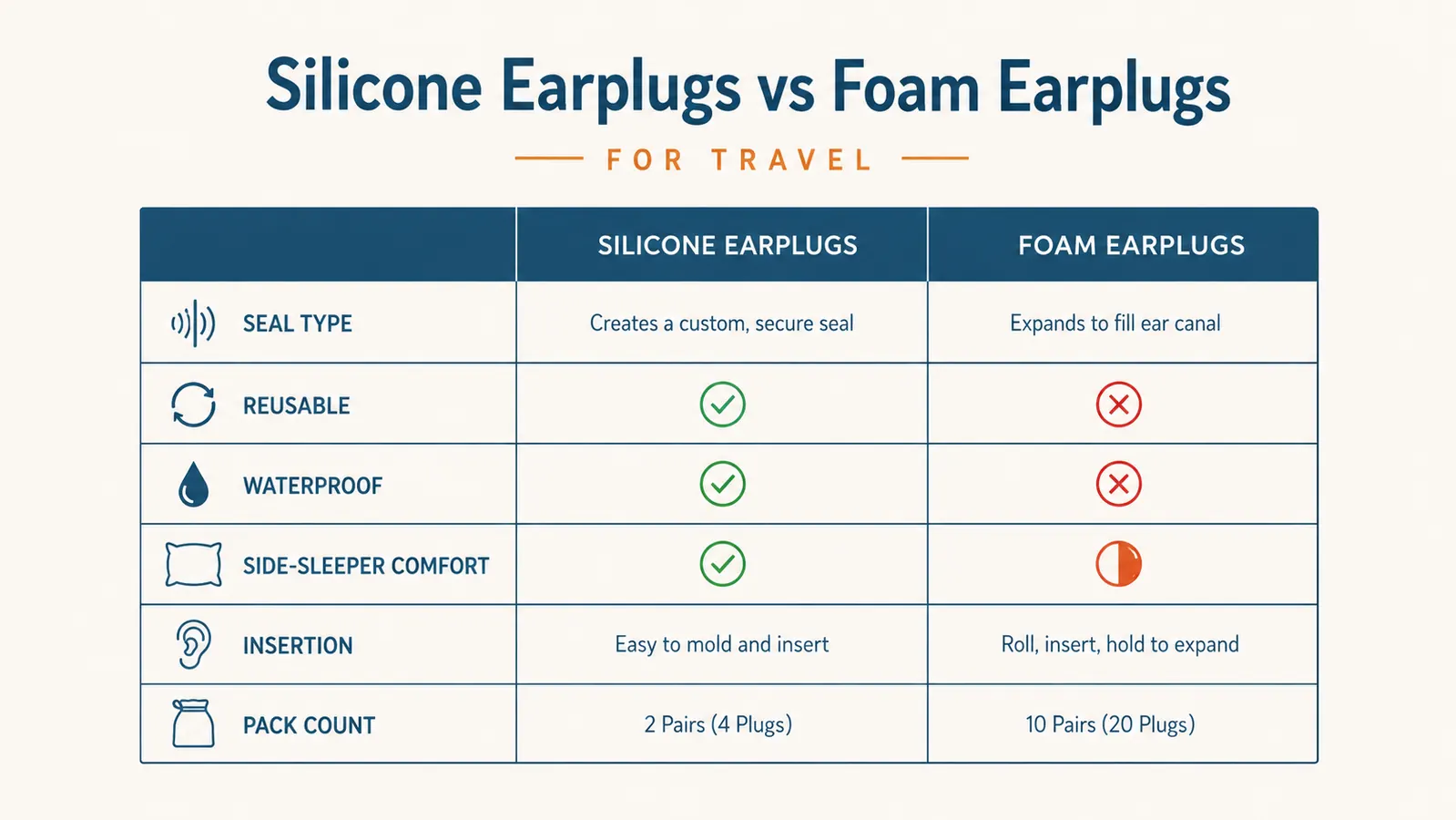
Foam earplugs need a minute or two to expand back to full size after you roll them, and if you shift positions before they finish expanding, they never seal evenly. I have woken up on descent with a half-expanded foam plug that did nothing for the last hour of a flight. Silicone putty seals the moment you press it into place. There is no waiting, no guessing whether it finished expanding before you fell asleep.
It Is Actually Comfortable for Side Sleepers
I sleep on my side on almost every flight over three hours, usually leaned against the window with a travel pillow. Foam earplugs sit down inside the canal, and when my ear presses against the window or a pillow, that pressure gets pushed straight into the plug. Mack's silicone sits low and flat across the outer ear, so lying on my side does not grind anything against my eardrum.
One Pair Lasts Days, Not One Flight
Foam plugs get compressed, dirty, and stiff after a single use, and by day two of a trip you are already opening a fresh pack. I can reshape the same silicone ball and reuse it across a full weekend trip if I keep it clean between uses, storing it back in the little case it comes with. Twelve pairs in a case has genuinely outlasted an entire two-week trip for me.
It Doubles as Swim Earplugs at the Hotel Pool
Foam disintegrates the moment it gets wet, so it is a one-trick item you toss after a flight. Silicone putty is naturally waterproof, which means the same pair that got me through a red-eye can go straight into the hotel pool or a shower without falling apart. On a cruise or beach trip, that is one less thing I need to pack separately.
No Canal Itch on Long-Haul Flights
Somewhere around hour eight of an international flight, foam earplugs start to itch inside the canal, and there is not much you can do about it without pulling them out entirely. Since silicone putty never actually goes inside the canal, that itch is not part of the equation. I have worn the same pair through a full Los Angeles to Sydney leg without needing to touch them once.

It Blocks a Steady Drone Better Than a Foam Filter
Engine noise on a plane is not a sudden bang, it is a constant low hum for hours. Foam plugs are built to filter sound waves through the material inside the canal, which works but still lets a steady drone bleed through at the edges. Mack's forms a physical seal across the whole outer ear opening, which acts more like closing a door on the noise than filtering it, and I notice the difference most on the loudest, oldest aircraft.
Twelve Pairs Covers a Whole Multi-Leg Trip
On a trip with three or four flight segments, I used to be digging through a crushed foam pack looking for a semi-clean pair by the last leg. Mack's ships 12 pairs in one compact case, so I have a fresh set for every segment of a long itinerary without buying a second box halfway through the trip.
Under $13 and Nearly 6,700 Travelers Landed on the Same Pick
Both foam and silicone plugs are cheap, but a 4.5-star average across almost 6,700 Amazon ratings for a $13 travel item is hard to argue with. I read through the low-star reviews before I bought my first case, expecting complaints about the seal or the smell. Most of the criticism was people wishing the case were slightly bigger. That is a minor gripe for something that has replaced an entire category of gear in my bag.
What I'd Skip
If you have very sensitive skin or a known reaction to silicone or lanolin products, patch test a small piece before relying on these for a long trip. Anyone who strongly prefers the deep, total-canal seal of a foam plug in an extremely loud environment, like standing next to a jet engine on a tarmac, may still want a high-NRR foam option for that specific case. And if the tacky, slightly sticky feel of putty in your fingers bothers you, that texture does not go away no matter how many times you use it. For regular flying, sleeping, and travel noise, none of that has been a real problem for me.
Foam earplugs work until they don't. Silicone does not ask you to guess whether it finished expanding before you fell asleep.
If you want the full breakdown after months of actual flights, the long-term review covers reuse, seal strength on loud aircraft, and how the case holds up in a packed bag. And if airport noise specifically is the problem you are solving, the step-by-step guide walks through the full system I use now, earplugs included.
Related: Mack's Silicone Earplugs Review: Months of Actual Flights | How to Block Airport Noise With Earplugs (Step by Step)
If you are still fishing a stiff foam plug out of your pocket before every flight, there is an easier way.
Mack's Pillow Soft Silicone Earplugs mold to your ear, skip the canal irritation, and go straight into the pool without falling apart. Check today's price and pack a case before your next trip.
Amazon Check Today's Price on Amazon →