
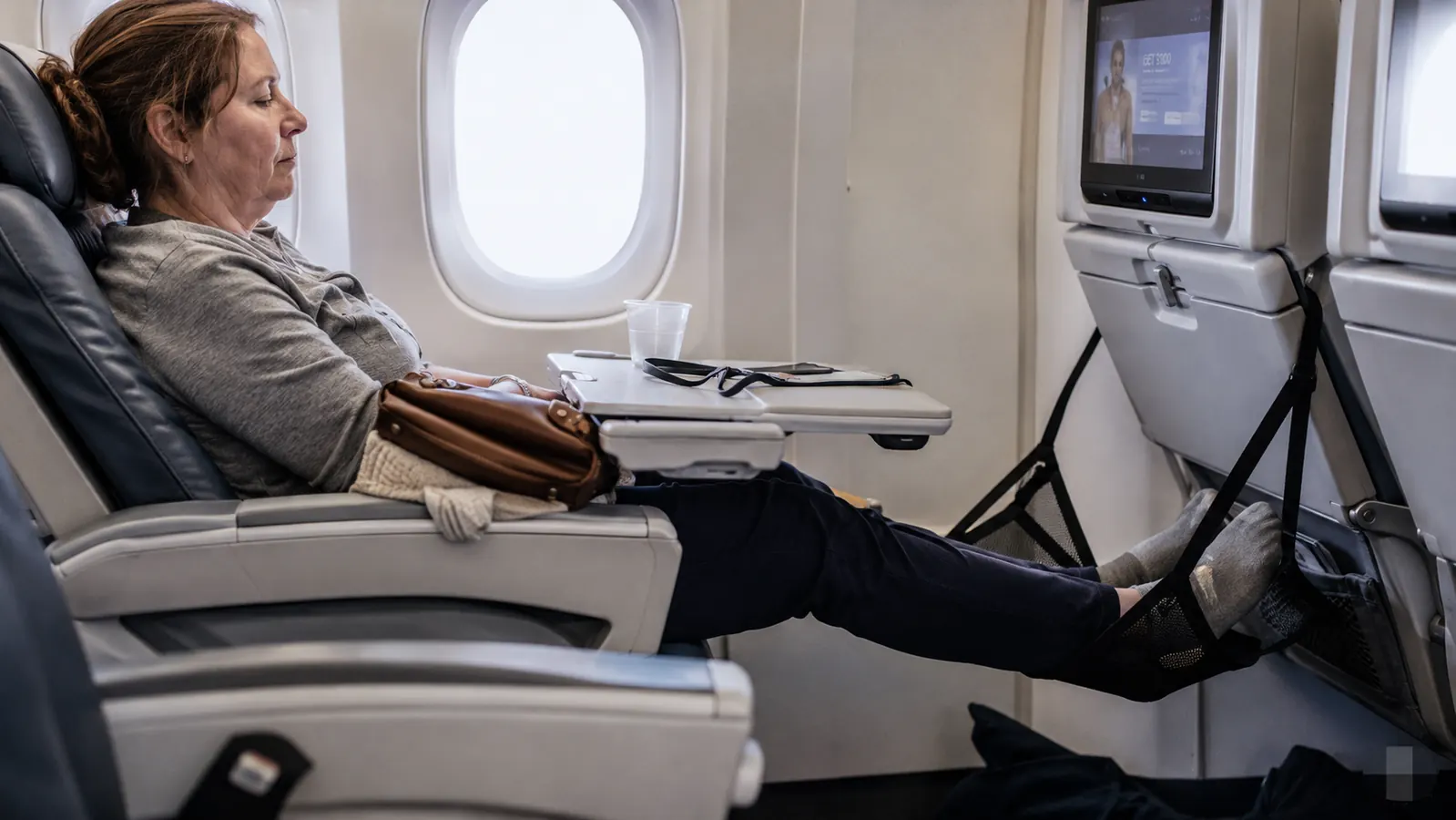
I own four BASIC CONCEPTS foot hammocks, not two, because I lost half of the first pack somewhere between a United flight to Denver and the rental car counter, and I liked the thing enough to just buy a second pack instead of hunting down a replacement strap. That's the honest starting point for this review. Sixty flights in, mostly economy, mostly Southwest and United, and one of these still rides in the front pocket of my carry-on every single trip. But if you read the five-star reviews on Amazon and went straight to checkout, there are three things about this hammock that nobody mentions, and one of them nearly got me a look from the woman in 22C.
This isn't going to be a takedown. I like the BASIC CONCEPTS foot hammock enough that I keep a spare in my laptop bag for flights I forget my main carry-on. But honest means I'm going to tell you about the seat-kicking, the tray-table math, and the height cutoff that the product photos conveniently never show you, because none of the models in those listing photos look like they're over five foot ten.
The Quick Verdict
A genuinely useful fix for shorter and average-height flyers on flights over two hours, but it fights the seat in front of you, needs the tray table down for the whole cruise, and stops making sense once you're past six feet.
Amazon Check Today's Price →Before you jam another backpack under the seat in front of you, try the thing that actually holds your feet up.
A rolled-up hoodie under your feet slides every ten minutes. A propped backpack digs into your ankles by hour two. The BASIC CONCEPTS foot hammock is the only setup I've found that stays put without babysitting it, as long as you know its limits going in. Check today's price on Amazon before your next flight.
Amazon Check Today's Price on Amazon →How I've Used It
I bought my first BASIC CONCEPTS hammock two years ago for a five-hour Austin to Seattle flight, after a chiropractor mentioned that elevating your feet slightly on long flights takes real pressure off your lower back, not just your ankles. I'd already tried propping my feet on my backpack for a few flights before that, and it worked for about twenty minutes at a time before the bag shifted or my foot slid off the top. The hammock was an eleven dollar experiment I almost didn't bother with, because I'd read enough Amazon reviews calling it a gimmick that I nearly talked myself out of the purchase. It's now a permanent fixture in my travel kit, and I've since learned it's neither the miracle some five-star reviews promise nor the gimmick the skeptics warn about. It's a genuinely useful, genuinely limited piece of gear, and both of those things are true at once.
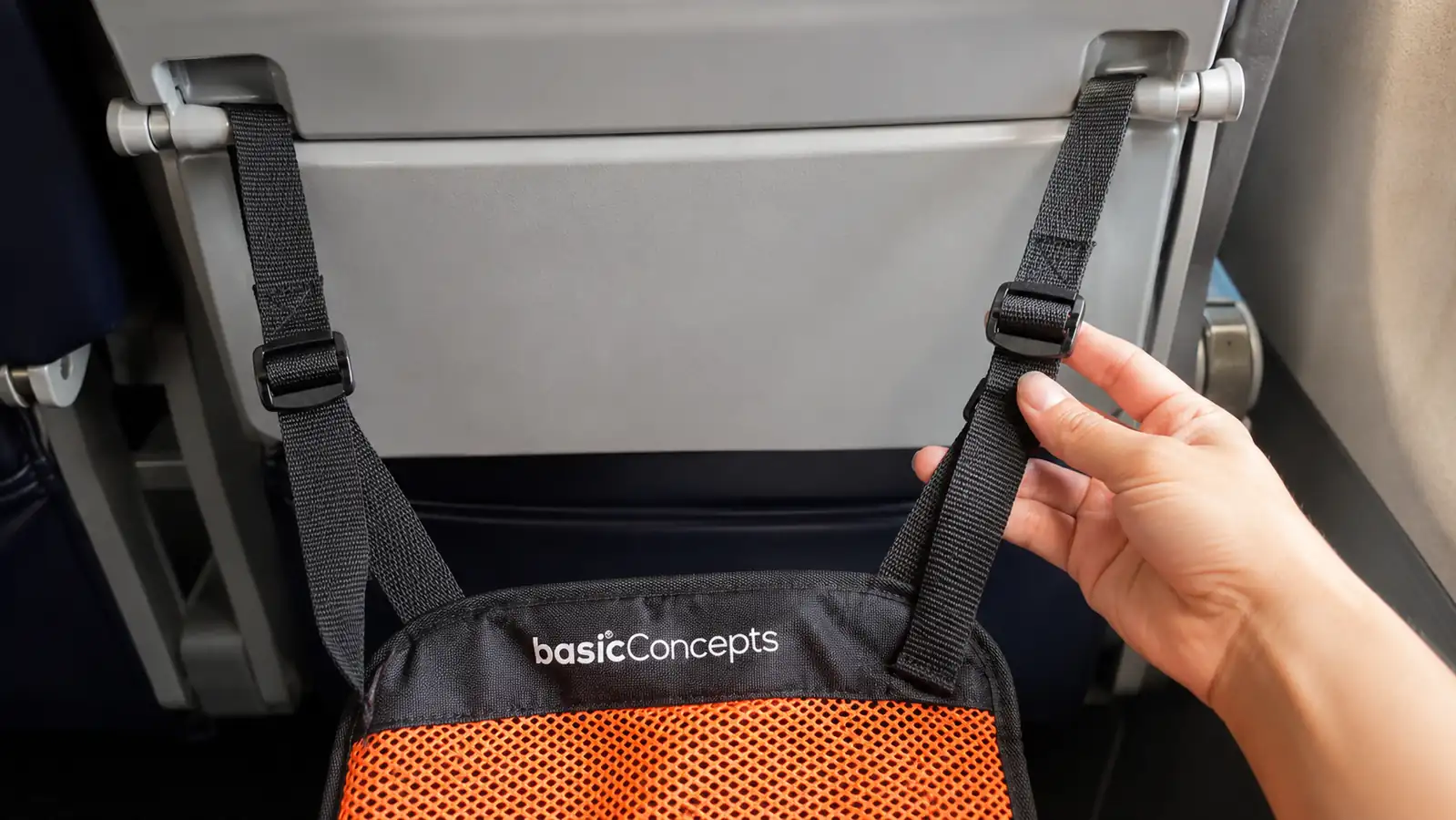
The setup takes about ninety seconds once you've done it a few times. You lower the tray table, loop the two straps around the metal arms that hold the table to the seatback in front of you, cinch the buckles until the mesh sits taut, and lower your feet into it. The first two or three flights I fumbled with the strap length, either too tight so my knees pushed up uncomfortably or too loose so my heels dragged the floor and defeated the point. Once I found my number, which for me is the third notch from the top on both straps, it's been consistent every time.
I've used it on short two-hour hops where it honestly wasn't worth the setup time, and on a nine-hour transatlantic flight where it was the single biggest comfort upgrade in my whole kit, bigger than the neck pillow I paid three times as much for. The sweet spot, in my experience, is anything over about two and a half hours. Under that, by the time you've got it clipped in and adjusted, you're already starting descent.
The Part Nobody Puts in the Five-Star Reviews: It Kicks the Seat in Front of You
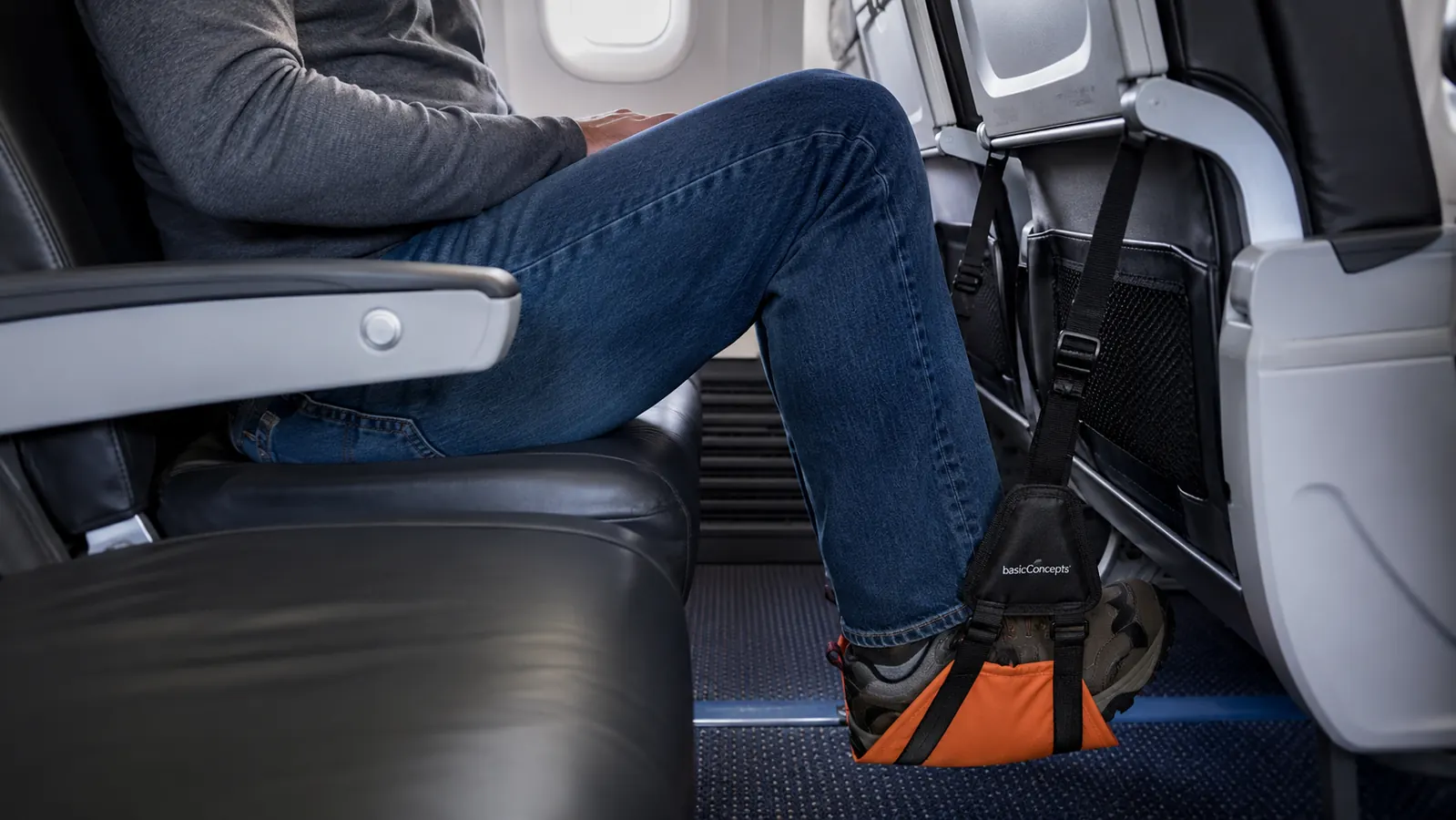
Here's the physics nobody warns you about. Your feet aren't resting on anything solid when they're in the hammock, they're suspended in mesh that flexes with every shift of your weight. When you doze off, which is honestly the whole point of using this thing on a long flight, your legs relax and your feet drift forward. On a normal economy seat pitch of thirty to thirty-one inches, which is most of Southwest, most of United's basic economy, and a good chunk of American's domestic fleet, that forward drift means your toes end up brushing, and sometimes outright pressing into, the back of the seat in front of you.
On a flight from Nashville to Phoenix last spring I fell asleep with my feet in the hammock somewhere over New Mexico and woke up to the guy in front of me twisting around in his seat, not angry exactly, but clearly annoyed, because my foot had been gently rocking his seatback screen for who knows how long. I apologized, tightened the straps two more notches, and spent the rest of the flight half-awake just to keep my feet from doing it again. That's not a one-time fluke. It's happened enough times, maybe six or seven flights out of sixty, that I now consider it a real limitation of the product, not user error.
It gets worse if the person in front of you reclines. Every inch they lean back is an inch less clearance between your suspended feet and their seatback, and on some of the tighter-pitch planes I've flown, a full recline from 14A left almost no buffer at all. I've started tightening my straps preemptively the second I see someone in front of me reach for their recline button, which works, but it also means the hammock sits higher and less comfortably than I'd otherwise want it.
If You're Over 5'10", Read This Before You Buy
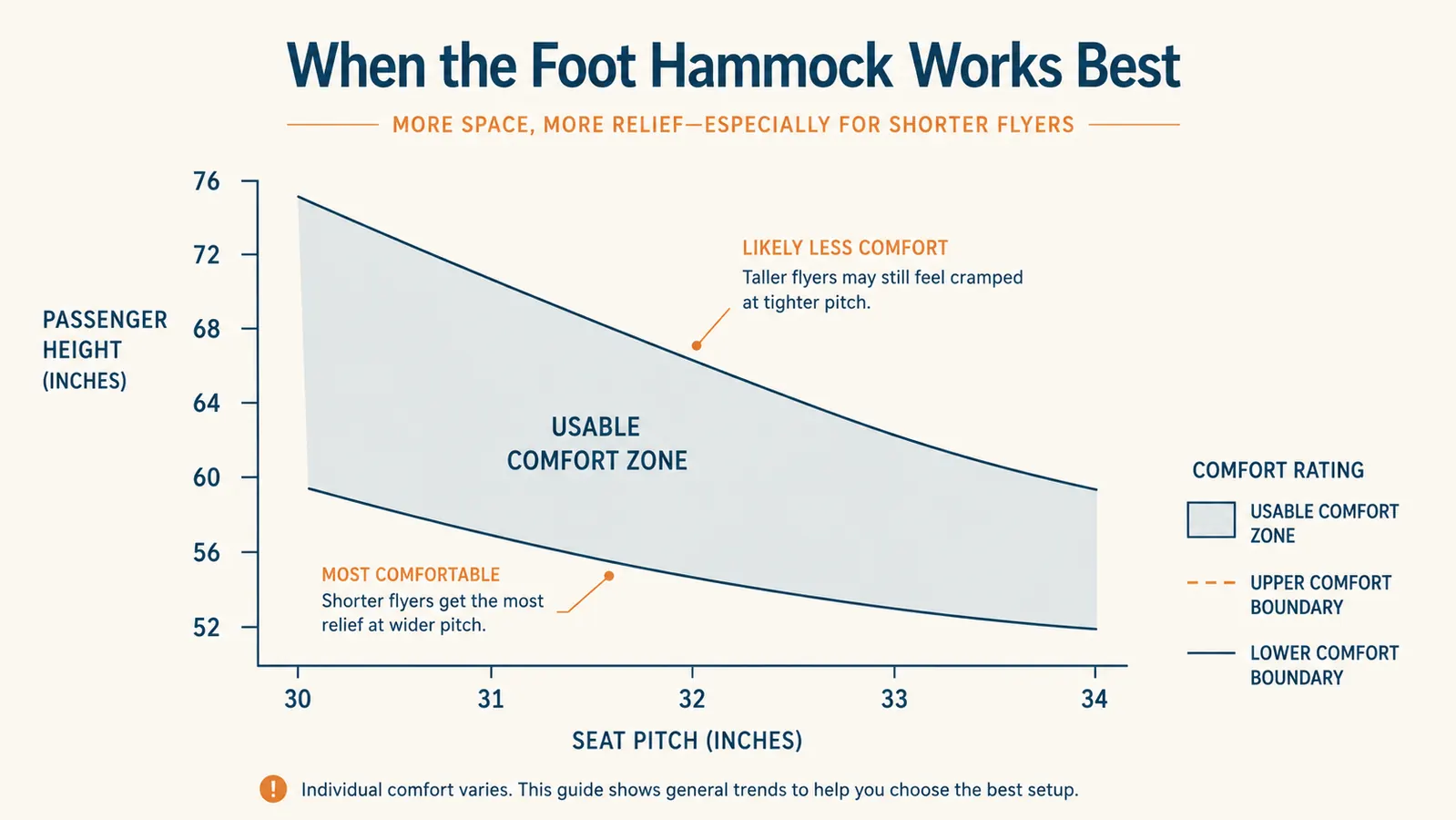
I'm five foot six, and at that height the hammock genuinely works the way the Amazon photos suggest. My husband is six foot two, and when he tried mine on a flight home from a wedding, he lasted about forty minutes before he took it off and put it back in the bag. His knees were already close to the seatback in front of him before he even added the hammock, and lowering it enough to keep his feet clear of that seatback meant his heels were basically brushing the floor, which defeats the entire purpose of elevating your feet in the first place.
The straps do adjust, and BASIC CONCEPTS gives you a decent range, but the range is built around average and below-average leg length relative to standard economy seat pitch. If your knees are already near the seatback with no hammock at all, which is the reality for most flyers over five foot ten in a thirty-inch pitch seat, adding a hammock doesn't create new space, it just gives your feet somewhere to sit within the space you already don't have much of. The taller you are, the less this product has to offer you, and the more likely you are to just be uncomfortable in a slightly different way than before.
If you're tall and flying premium economy or an exit row with real legroom, this changes. My husband tried it again on an exit row flight to Denver where he had close to six extra inches of pitch, and it worked fine there. So the honest answer isn't just about your height, it's about your height relative to whatever seat pitch you've actually booked. Check your legroom before you assume the hammock will solve a problem the seat itself is causing.
The Tray Table Problem
This is the limitation that surprised me most, because it's not in a single review I read before I bought mine. The hammock clips to the tray table arms, which means the tray table has to stay down for the entire time you're using it. That sounds obvious once you say it out loud, but it has real consequences. You cannot use the hammock during beverage or meal service unless you're comfortable balancing your drink on a table that's also anchoring straps under tension, which I don't recommend after nearly losing a ginger ale down my own lap on a Delta flight to Atlanta.
It also means unclipping and reclipping every single time a flight attendant asks you to stow your tray table, which is taxi, takeoff, landing, and any real turbulence. On a short flight that can mean setting it up and tearing it down two or three times for maybe ninety total minutes of actual use, and at that point I usually just skip it and read a book instead. On a long-haul flight this is a minor inconvenience you do twice. On a two-hour regional hop it can eat up enough of the flight that the hammock isn't worth pulling out of your bag.
There's a seating configuration issue too. A handful of aircraft, particularly some United Economy Plus rows and a few JetBlue configurations I've flown, have the tray table built into the armrest instead of the seatback in front of you. On those seats there's nothing for the hammock's straps to clip around, and the product simply doesn't work. It's a small percentage of the flights I've taken, maybe four or five out of sixty, but it's happened often enough that I now check my seat map before I bother packing it for a short trip.
What I Tried First (and Why I Came Back to This)
Before the hammock, my go-to was propping my feet on my backpack under the seat in front of me. It's free, it requires no gear, and for the first fifteen or twenty minutes it feels fine. The problem is the bag shifts every time you move, the zippers and buckles dig into your heels, and by hour three you're refitting it constantly instead of resting. I also tried one of the inflatable footrest cushions, which held its shape better but took up enough space in my carry-on that I stopped packing it, and slowly leaked air over a long flight until I was basically back to flat ground by the descent.
Compression socks helped the swelling in my ankles, but they don't address the lower back pressure that comes from sitting with your feet flat on the floor for six or eight hours straight, which was actually the bigger problem for me. Between the three alternatives, the foot hammock is still the one I reach for first, seat-kicking and tray-table hassle included, because it's the only option that actually takes weight off my lower back without me having to readjust it every ten minutes. It's not a perfect product. It's the best imperfect option I've found in the under-fifteen-dollar range.
What I Liked
- Genuinely reduces lower back and ankle pressure on flights over two and a half hours
- Two-pack means a built-in backup when a strap or clip fails
- Packs flat and weighs almost nothing in a carry-on
- Once strap length is dialed in, setup takes under two minutes
- Works on almost any standard economy seat with a seatback tray table
Where It Falls Short
- Feet drift forward during sleep and can bump the seat in front of you, especially at tight seat pitch
- Not much benefit for flyers over about five foot ten in standard economy pitch
- Requires the tray table to stay down, so it's unusable during meal or beverage service
- Doesn't work on seats with armrest-mounted tray tables instead of seatback-mounted ones
- Setup and teardown for taxi, takeoff, and landing gets tedious on short flights
The foot hammock does not care that the woman in 22C just reclined her seat six inches into my swinging feet. Managing that is on me, not the product, but nobody tells you that part before you buy.
Who This Is For
If you're under about five foot ten, fly economy on flights of two and a half hours or longer, and you're the kind of traveler who plans your own carry-on rather than relying on whatever the airline happens to give you, this is worth the eleven dollars. It's especially good for anyone who deals with ankle swelling or lower back stiffness on long-haul flights and doesn't want to spring for a premium seat every time to get relief. It's also a smart pick for anyone who already checks their seat map before booking, because knowing your pitch in advance means you'll know within seconds of sitting down whether tonight is a hammock night or not.
Who Should Skip It
If you're taller than six feet, fly mostly short regional hops under ninety minutes, or you tend to book seats with armrest-mounted tray tables, save your money and your patience. The same goes if you're easily self-conscious about extra gear at boarding or hate the idea of unclipping and reclipping something every time the seatbelt sign comes on. I'd also skip it if you're the kind of flyer who works on a laptop for most of the flight, since the tray table is doing double duty and there's no good way to type and keep your feet suspended at the same time. For those flyers, a good pair of compression socks and an aisle seat will do more for you than this will.
If you fit the profile above, this is one of the cheapest real upgrades in your carry-on.
Under six feet, flights over two and a half hours, and you're tired of your feet swelling by the time you land. That's exactly who this was built for. Check today's price on Amazon and see the current listing photos for yourself.
Amazon Check Today's Price on Amazon →