
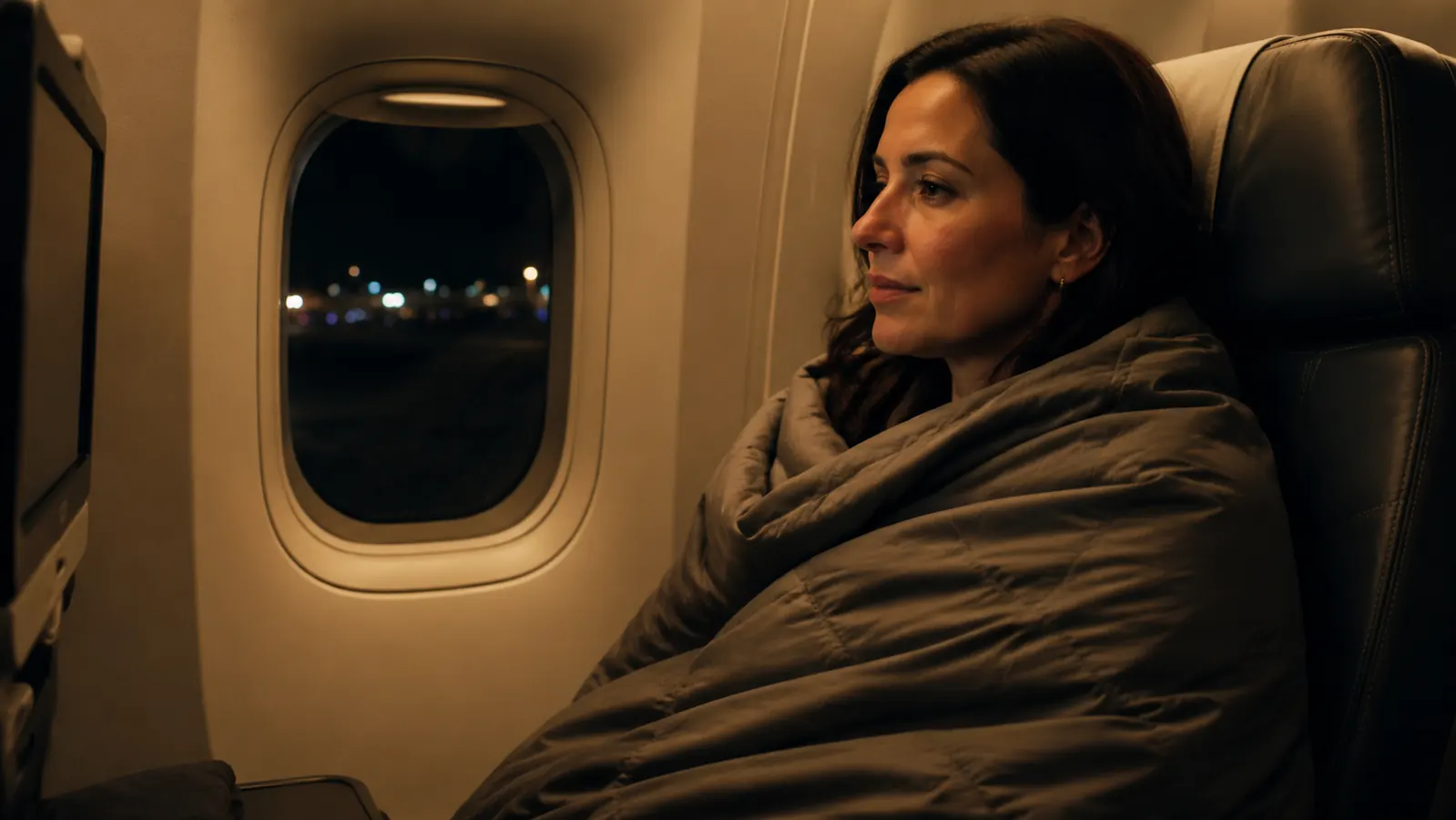
The first time I flew a red-eye to London, I did what most people do. I figured the airline blanket would be enough, folded it over my lap somewhere around Greenland, and spent the next four hours shivering with my arms crossed, waiting for a flight attendant to notice I was awake and miserable. That blanket was maybe two feet wide, thin as a bedsheet, and about as warm as a paper towel. I landed with a stiff neck and a headache and swore I'd figure this out before my next long-haul. That's when I started packing my own blanket, and after testing a few, the EverSnug travel blanket is the one that actually stayed in my carry-on for good.
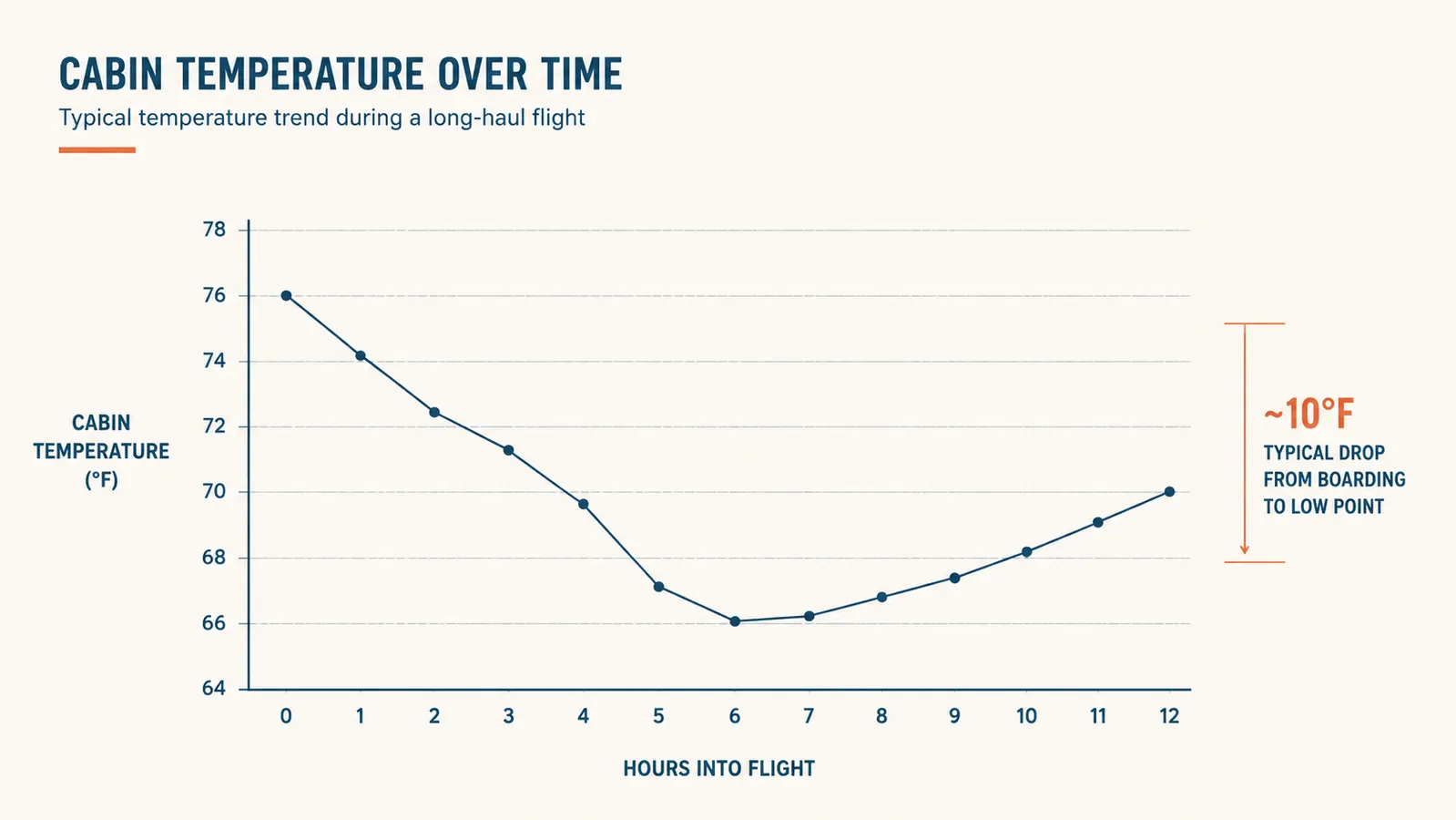
Cabin temperature isn't random. Airlines keep planes cool on purpose, partly for the electronics and partly because a full cabin of moving bodies generates more heat than you'd think, and cooler air keeps people from getting drowsy or airsick. That's great for the crew's job and terrible for anyone trying to sleep in a t-shirt. On top of that, cruising altitude air is dry, sometimes under 20 percent humidity, and dry air pulls heat off your skin faster than the humid air you're used to at ground level. So it's not your imagination. Planes really are colder than they feel like they should be, and the thin outfit that was comfortable at the gate is often the wrong call by hour three.
Below is the exact system I use now, step by step, to stay warm from boarding to landing without relying on the airline to bail me out. None of it requires checking a bag or spending a fortune. It's mostly about what you wear, what you pack, and how you actually use what's already in your seat, in an order that actually matters once the cabin lights go down and the cart stops coming by.
Stop Fighting Over the Airline Blanket
The EverSnug travel blanket packs down to the size of a water bottle and unfolds into a full-size, fleece-lined blanket with a hood. It's the one piece of gear that fixed my long-haul flights for good.
Amazon Check Today's Price on Amazon →Step 1: Dress in layers you can actually remove
This sounds obvious, but most people get it backwards. They wear one warm layer, like a hoodie, and then have nothing left when the plane gets cold and nothing to shed if it gets warm during boarding while 150 people and their bags heat up the cabin before the AC catches up. I fly in a light long-sleeve base layer, then a packable layer on top I can zip open or take off, then whatever outer jacket I was already wearing through security. That gives me three temperature settings instead of one, and I can adjust without digging through the overhead bin mid-flight.
Cotton is the wrong call here. It holds moisture, and once you've sweated even a little during boarding, a cotton layer turns cold and clammy the second the AC kicks in over the Atlantic. I stick to merino wool or a synthetic blend for the base layer. It's a small swap but it changes how the whole flight feels, especially on flights longer than five or six hours where you don't get a chance to change clothes.
Socks matter more than people expect too. Compression socks are great for circulation, but they're often thin. I bring a second pair of plain wool socks just for sleeping, and I change into them after the meal service instead of wearing the same pair I walked through the airport in. Cold feet are one of the fastest ways to feel cold everywhere, even when your torso is perfectly warm, and it's the layer people forget to plan for until they're already uncomfortable.
Step 2: Pack a real travel blanket, not the airline one
This is the step that actually moved the needle for me. Airline blankets are a courtesy, not a comfort item. They're thin, they're shared property that gets reused between flights more often than anyone wants to think about, and there usually aren't enough of them once the flight is more than half full. I stopped counting on them years ago, somewhere around my fortieth or fiftieth flight, once I did the math on how many red-eyes I was showing up to work exhausted after.
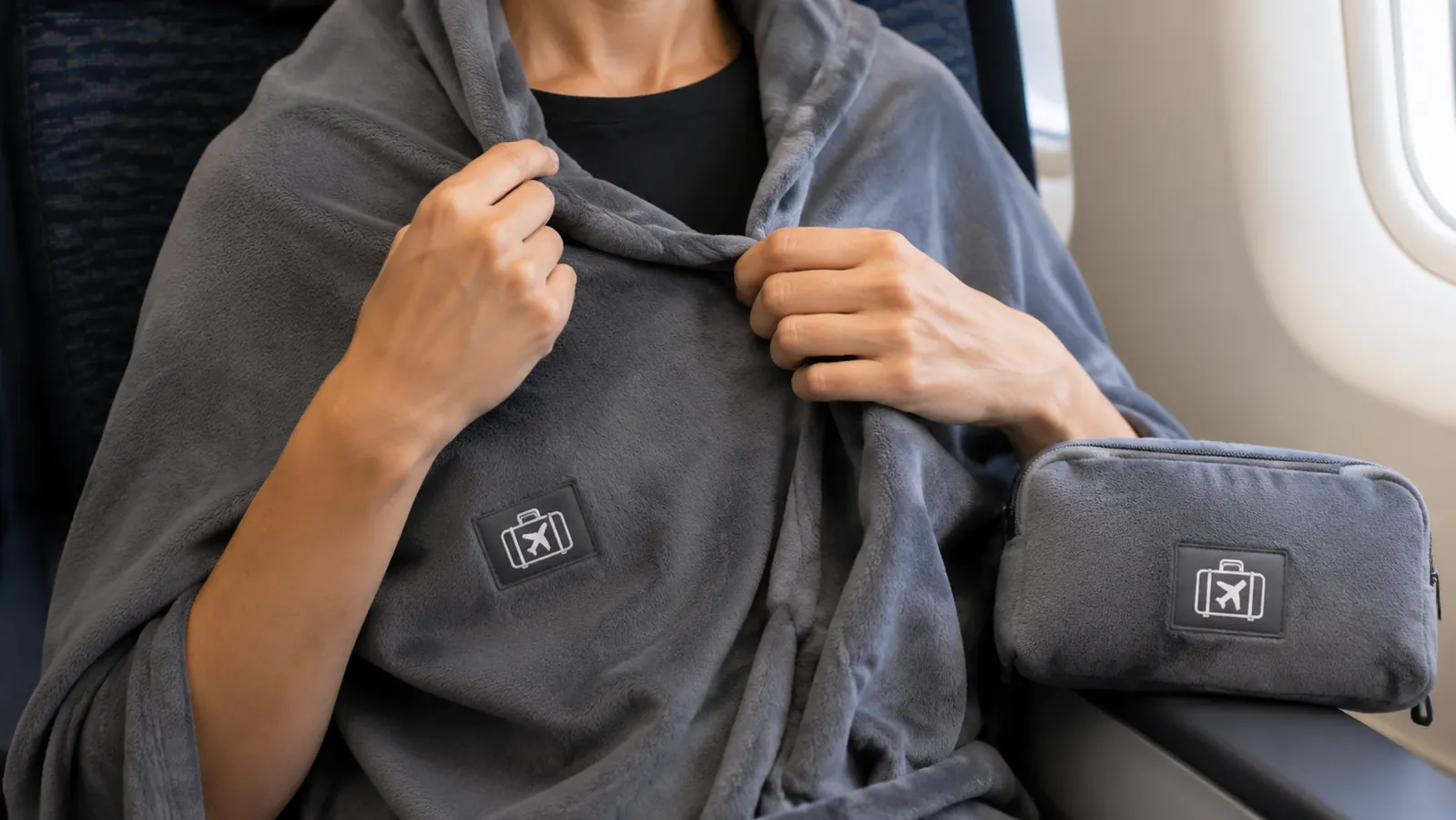
The EverSnug travel blanket is what replaced them for me. It's a two-in-one design, fleece on one side and a soft sherpa-style fabric on the other, and it comes with its own drawstring pouch that doubles as a small pillow when the blanket is stuffed back inside. Packed, it's roughly the size of a water bottle, which means it lives in the outer pocket of my backpack instead of taking up real packing space. Unpacked, it's a full 50 by 60 inches, big enough to actually cover my shoulders and my feet at the same time, which the airline version never managed.
It also has a hood, which I didn't think I'd use much and now use on almost every overnight flight. More on that in the next step. The point of this one is simple: bring your own blanket. Don't gamble on the cart making it to your row before the cabin gets cold, and don't assume the seatback pocket will have one waiting when you need it most. I've been on flights where the crew ran out entirely before reaching row 30.
Step 3: Use the blanket like a system, not a lap cover
Most people treat a blanket as one flat piece of fabric they drape over their knees. That's the least effective way to use it. Heat escapes fastest from your neck, your feet, and any gap where cold air can sneak in around your sides. I wrap the EverSnug blanket around my shoulders first, like a poncho, using the built-in hood if the cabin lights are dim enough that nobody's judging me for it. Then I fold the bottom half up and over my knees and tuck the loose edges under my thighs on both sides.
That tucking step is the part everyone skips. A blanket that's just laid over you loses its warmth the second you shift in your seat, because gaps open up along your sides. Tucking the edges under your legs seals those gaps and traps your own body heat instead of letting it escape into the aisle every time you reach for your water bottle or adjust your seat.
On flights where I know I'll actually sleep, I'll pull the hood up and cinch it loosely, which keeps warm air near my neck and blocks a surprising amount of the draft that comes off the window or the air vent above my row. It's a small adjustment that made a bigger difference than I expected the first time I tried it on a flight to Reykjavik in February, where the window itself felt cold to the touch for most of the flight.
Step 4: Take control of your personal air vent
The overhead air nozzle is one of the biggest reasons people get cold on planes, and it's also the easiest fix, because you already control it. I close mine completely for the first hour of any long flight while the cabin is still adjusting to cruising altitude, then open it just slightly and point it away from my body, toward the aisle or the seatback in front of me instead of straight down at my shoulders.
If the person next to me has theirs blasting cold air, I'll politely ask if they mind me adjusting the shared vent panel, or I'll just angle my own blanket and hood to block the draft rather than making it a whole conversation. Either way, don't ignore that little nozzle. On a lot of aircraft it's the single coldest point of airflow in your row, colder than the general cabin temperature by a noticeable amount, and it's aimed right at your neck and shoulders by default.
Step 5: Protect your feet and extremities separately
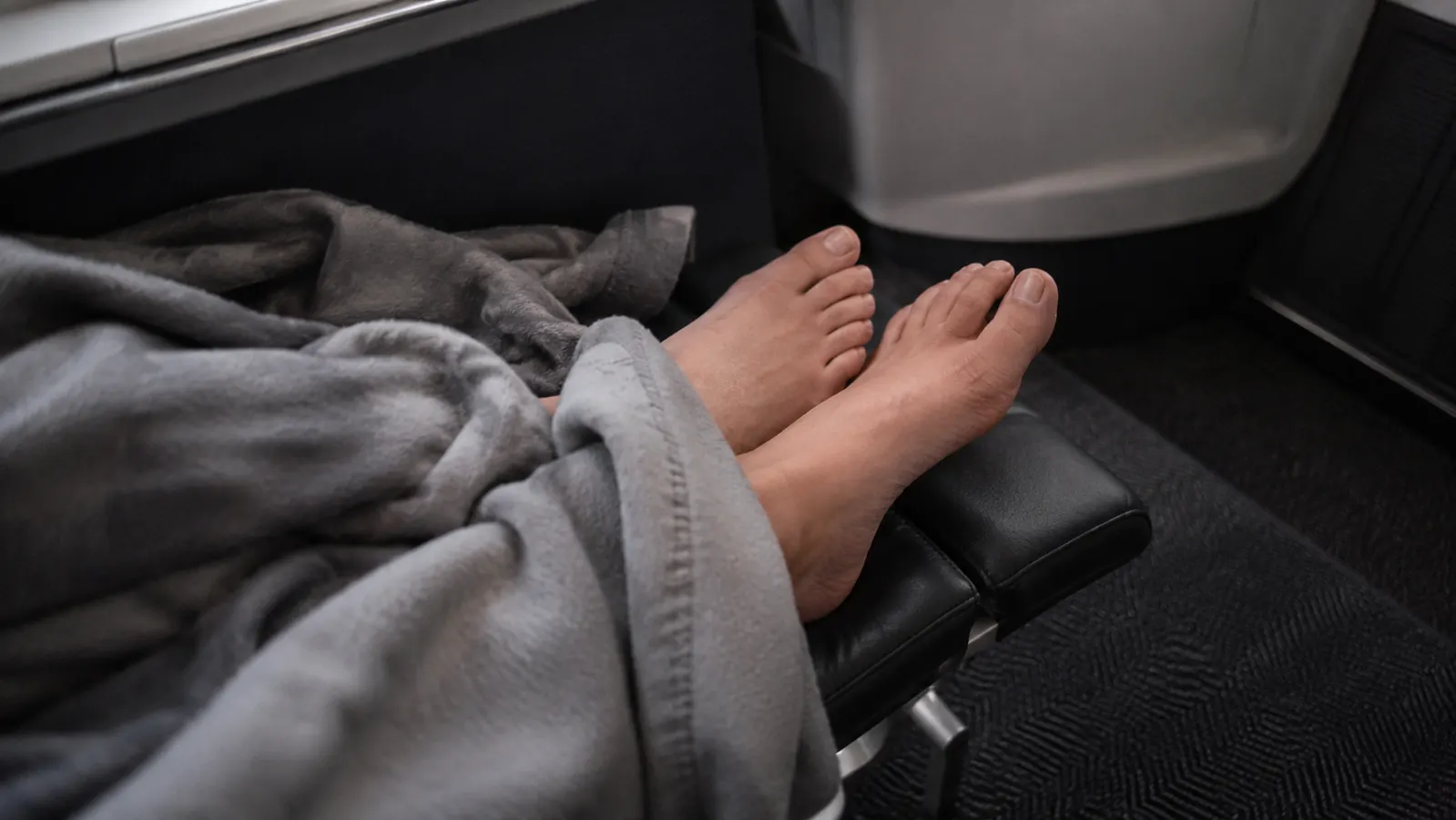
Your core can feel fine while your feet are freezing, especially in shoes that were comfortable for walking through the terminal but do nothing once you've been sitting still for three hours. I always change into slip-on shoes or slides for the flight itself and pack real shoes in my bag, then use the extra length of the EverSnug blanket to wrap my feet the same way I'd tuck a blanket around them at home, fully covered with the fabric folded under rather than just resting on top.
Hands are the other spot people forget. If the plane is cold enough that my hands feel it, I'll pull them inside the edges of the blanket rather than leaving them out to hold a phone or a book. It sounds small, but keeping your extremities covered does more for how warm you feel overall than piling another layer on your torso, since your body naturally pulls blood away from your hands and feet first when it's trying to conserve heat.
During descent, cabin temperature usually shifts again as the plane changes altitude and the crew starts prepping for landing. I keep the blanket on through that whole stretch instead of packing it away early, since that's often when I've noticed the temperature dip a second time, right when everyone else has already given up and put their blanket in the overhead bin, then spent the last thirty minutes of the flight rubbing their arms.
What Else Helps
A good blanket solves most of the problem, but a few other things round it out. A contoured sleep mask keeps light from waking you up the moment the cabin gets warm enough to stir, and a set of moldable earplugs cut the engine drone that makes it hard to actually stay asleep once you're finally warm and comfortable. Between the two, I fall asleep faster and stay asleep longer, which matters more than the blanket alone if the goal is actually landing rested instead of just landing less miserable.
I also drink a warm cup of tea or hot water if the cart comes by before I settle in, since a warm drink genuinely does raise your perceived temperature for the first hour or so, even if the physics of it are modest. I skip alcohol on overnight flights for the same reason, since it can make you feel warm at first but actually lowers your core temperature as it wears off, which is the opposite of what you want six hours into a red-eye. And I always pick an aisle or middle seat over a window on winter routes if I have the choice, since the window itself acts like a cold panel radiating straight at whoever's sitting next to it.
The blanket isn't a nice-to-have anymore. It's the difference between landing rested and landing wrecked.
Pack the Blanket That Actually Works
I've flown with the EverSnug on red-eyes, transatlantic hauls, and everything in between. It packs small, it covers shoulders to feet, and the hood alone has saved more than one flight for me.
Amazon Check Today's Price on Amazon →