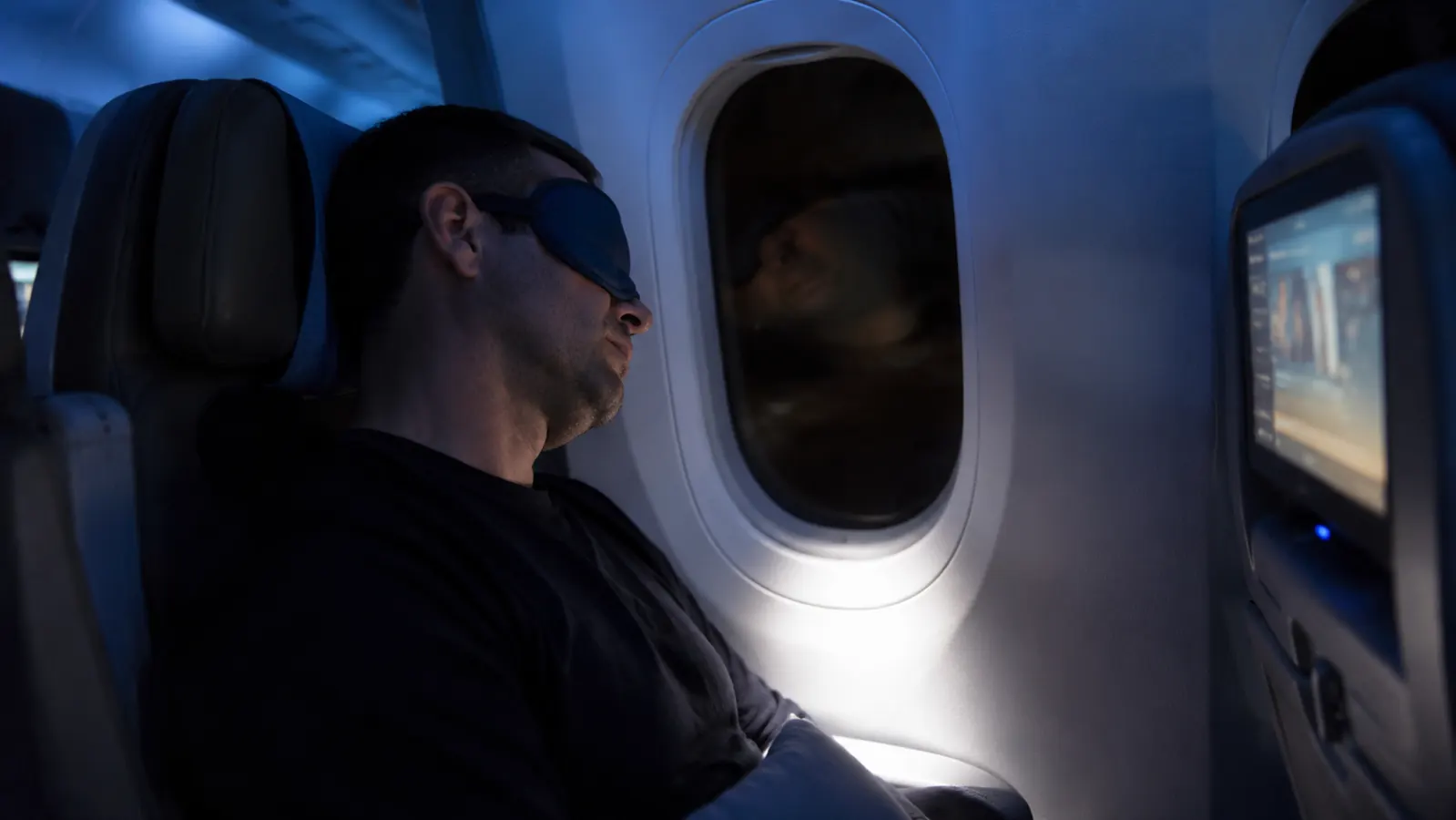
I used to think eye masks were a gimmick, the kind of thing flight attendants hand out in a plastic sleeve along with earplugs and a pair of socks you'll never wear twice. Then I flew the 10:40 PM red-eye from Denver to Newark on a middle seat, next to a toddler who fought sleep for two and a half hours, under a reading light someone in row 14 refused to turn off, and I landed at 6 AM with a work presentation at 9. That flight is the reason I now travel with a YIVIEW sleep mask zipped into the front pocket of my carry-on, and it has not moved since.
I'd flown red-eyes before that trip. I always figured I'd just tip my head against the window and drift off, the way I had in my twenties when I could sleep anywhere. That stopped working somewhere around year three of monthly business travel. My eyes stayed open every time a screen lit up two rows ahead, every time the cabin crew walked the aisle with a flashlight, every time the kid three seats over decided 1 AM was a great time to be awake.
That Denver flight was the breaking point. I'd used the free paper-thin mask from a hotel amenity kit, the kind that's basically two layers of cheap fabric with an elastic band. It slid up my forehead the second I turned my head. I woke up every twenty minutes readjusting it, more tired at landing than I'd been at boarding. I walked into that 9 AM meeting running on ninety minutes of broken sleep and a gas station coffee, and I promised myself I'd never do a red-eye unprepared again.
So I did what I always do when a piece of gear fails me mid-trip. I got specific about what actually went wrong. It wasn't that a mask was a bad idea, it was that a flat mask presses directly on your eyelids and slides the second you're not lying flat on your back, which is exactly the position nobody gets on a plane. What I needed was something contoured, something that kept light out without touching my eyes, and something that would stay put whether I was leaning left against the window or slumped forward with my head on the tray table.
The mask wasn't the upgrade. Sleep was the upgrade. The mask was just the eight dollar tool that got me there.
The Mask I Now Pack on Every Overnight Flight
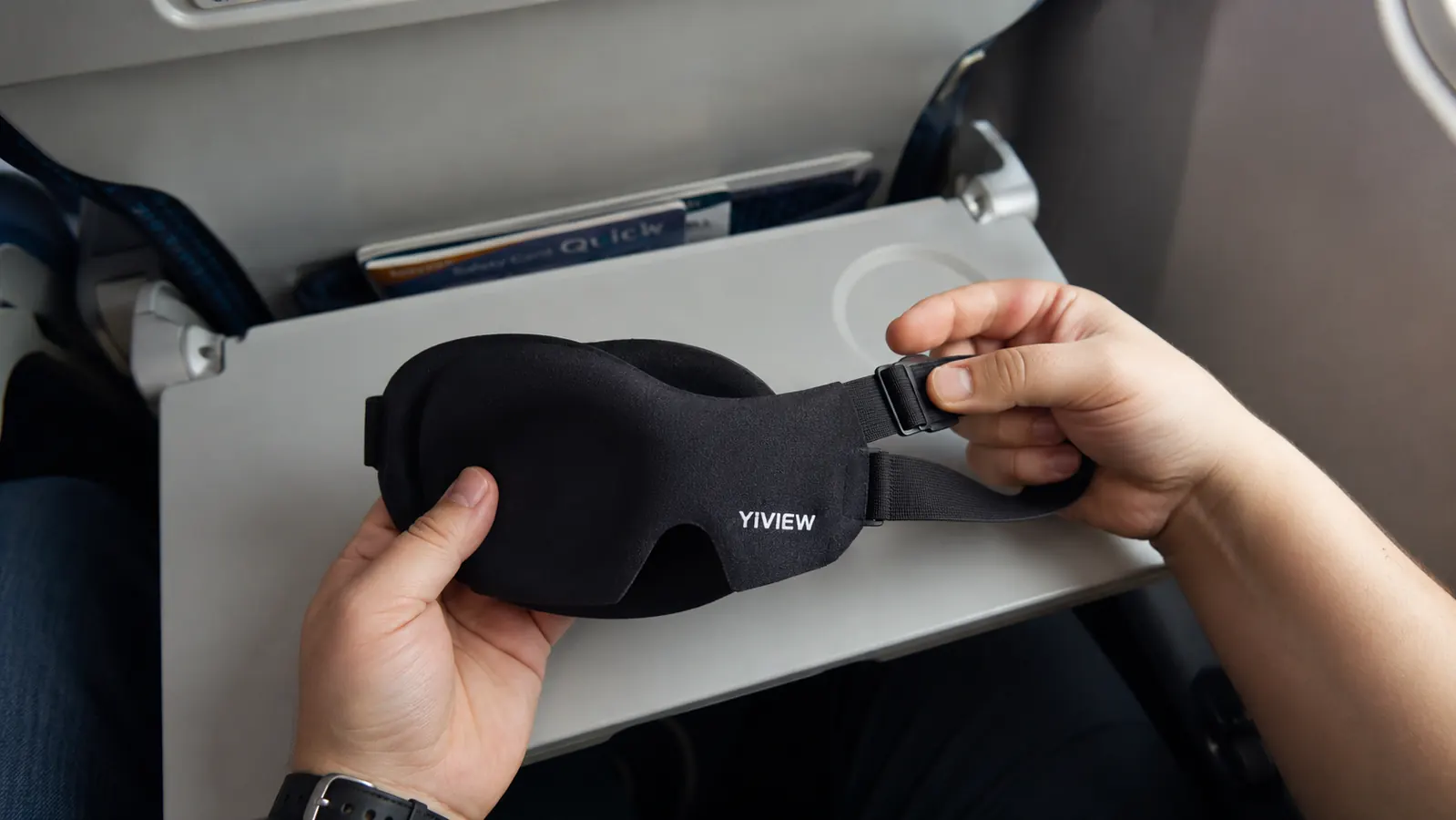
The YIVIEW 3D contoured mask has a molded shape that keeps fabric off your eyelids and blocks light from every angle, including the gaps at your nose that flat masks always miss. It comes three to a pack, so I keep a spare in my checked bag and one on my nightstand at home.
Amazon Check Today's Price on Amazon →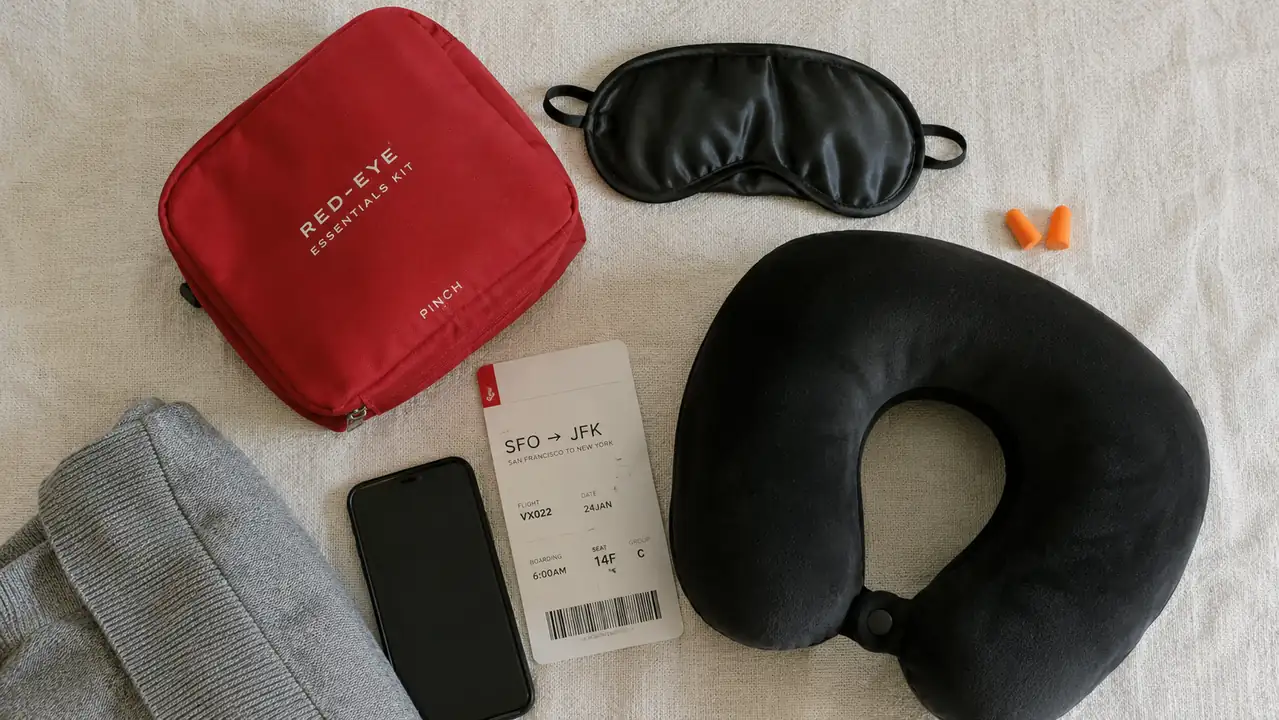
I bought my first YIVIEW mask before a Denver to Tokyo flight about four months after that miserable Newark red-eye, mostly because I'd read enough reviews mentioning the 3D shape to think it might actually solve my sliding problem. The first thing I noticed putting it on was how little it touched my eyes. The molded cups sit above the eyelids instead of resting on them, so you can actually open your eyes underneath it without brushing your lashes against fabric. That sounds small until you're the person who used to wake up because a mask shifted and light hit your eyes at 35,000 feet.
On that Tokyo flight I slept close to five hours, broken into two stretches, which for me on a plane is practically a personal record. I woke up somewhere over the Pacific with the mask still exactly where I'd put it on. No readjusting mid-flight, no waking up with it bunched around one ear. The strap is wide and adjustable, and it doesn't dig in behind your head the way a thin elastic band does after four or five hours.

I've since used it on maybe fifteen more flights, plus regular use at home during a stretch where I was sleeping days for a project with an overseas team. It's held up fine through all of that, the fabric hasn't pilled, the elastic hasn't gone slack, and because it comes in a three pack I've never had to think about it wearing out mid-trip. I keep one in my carry-on, one in my gym bag for naps between flights on long layovers, and one at home.
It's not a fancy piece of gear. It's eight dollars for three masks, it doesn't have Bluetooth or a heating element or any of the features some of the pricier travel sleep brands lean on. What it does is block light completely and stay on your face without pressing on your eyes, which turns out to be the entire job an eye mask needs to do. I didn't need innovation. I needed something that worked every single time, and this is the first one that has.
Stop Landing Exhausted on Overnight Flights
If you've got a red-eye coming up, don't repeat my Denver mistake. A contoured mask that actually blocks light and stays put costs less than the coffee you'll buy trying to recover from a bad one.
Amazon See the YIVIEW 3-Pack on Amazon →What I'd Tell You If We Were Sitting at My Kitchen Table
If you flew a handful of times a year, I probably wouldn't bring this up over coffee. Use the hotel mask, use nothing, it won't matter much either way. But if you're doing red-eyes with any regularity, the difference between a flat freebie mask and a real contoured one is the difference between landing functional and landing wrecked. I'm not going to pretend an eight dollar mask changed my life. It didn't. What it did was let me actually sleep on the flights where sleep was the whole plan, and that's worth more to me than almost anything else in my carry-on. Pack one. Keep the spares. You'll forget it's even a purchase you made until the night it saves your whole next day.